Almost every week, someone sits down in our office and describes a mood problem that turns out to have a rhythm to it. Fine at 8 a.m., unraveling by 11. Short-tempered with the kids right before dinner. Wired at midnight, exhausted at seven. When we walk backward through the day, we frequently find coffee on an empty stomach, no real lunch, and a large late dinner — a pattern that would make almost anyone feel anxious and flat.
Food is not a treatment for depression, anxiety, PTSD, or ADHD, and no one should be told to eat their way out of a psychiatric illness. But nutrition sets the conditions your brain has to work in, and those conditions are one of the few levers you can adjust today, without a prescription, at any income level. This is a practical guide to what actually matters.
Your brain is a metabolically expensive organ
The brain is about two percent of your body weight and consumes roughly twenty percent of your energy. It runs continuously and has almost no fuel storage of its own, which is why it is unusually sensitive to what arrives in the bloodstream and when. Building serotonin, dopamine, norepinephrine, and GABA requires amino acids from protein plus cofactors — B6, B12, folate, iron, magnesium, and zinc. Cell membranes that let neurons signal cleanly are built substantially from fats, including omega-3s. Chronic inflammation, which diet strongly influences, is now one of the better-supported biological contributors to depression.
None of that means a nutrient is "causing" your depression. It means the machinery of mood has material requirements, and it is worth making sure they are met while you do the harder work of treatment.
Blood sugar: the most underrated mood variable
If you only change one thing, change this. A refined-carbohydrate meal eaten alone — a pastry, a bagel, a soda, a bowl of cereal — raises blood glucose quickly. Insulin responds, glucose falls, and if it falls fast enough your body releases adrenaline and cortisol to bring it back up. Those hormones produce shakiness, a racing heart, sweating, irritability, and difficulty concentrating. Physically, that state is nearly identical to anxiety, and your brain will happily attach a story to it: your job, your marriage, your health.
The fix is unglamorous. Pair carbohydrates with protein, fat, and fiber. Eat on a predictable rhythm rather than going eight hours and then eating everything. Put twenty to thirty grams of protein into breakfast. People who make only this change often report that their mid-morning "anxiety" and their late-afternoon fuse problem both improve within a week or two.
The gut-brain connection
Your gut and brain are in constant conversation through the vagus nerve, immune signaling, and chemicals produced by gut bacteria. Bacteria that ferment fiber make short-chain fatty acids such as butyrate, which help maintain the gut lining and lower systemic inflammation. Diets dominated by ultra-processed food — low fiber, high refined starch, emulsifiers and additives — tend to reduce microbial diversity and raise inflammatory markers.
You do not need an expensive protocol. Aim for twenty-five to thirty-five grams of fiber a day from vegetables, beans and lentils, fruit, oats, and nuts, and add a small daily serving of a fermented food — yogurt, kefir, kimchi, sauerkraut, miso. Increase fiber gradually and with water; going from ten grams to thirty-five overnight is uncomfortable enough that most people quit.
Nutrients worth knowing about
Omega-3 fatty acids
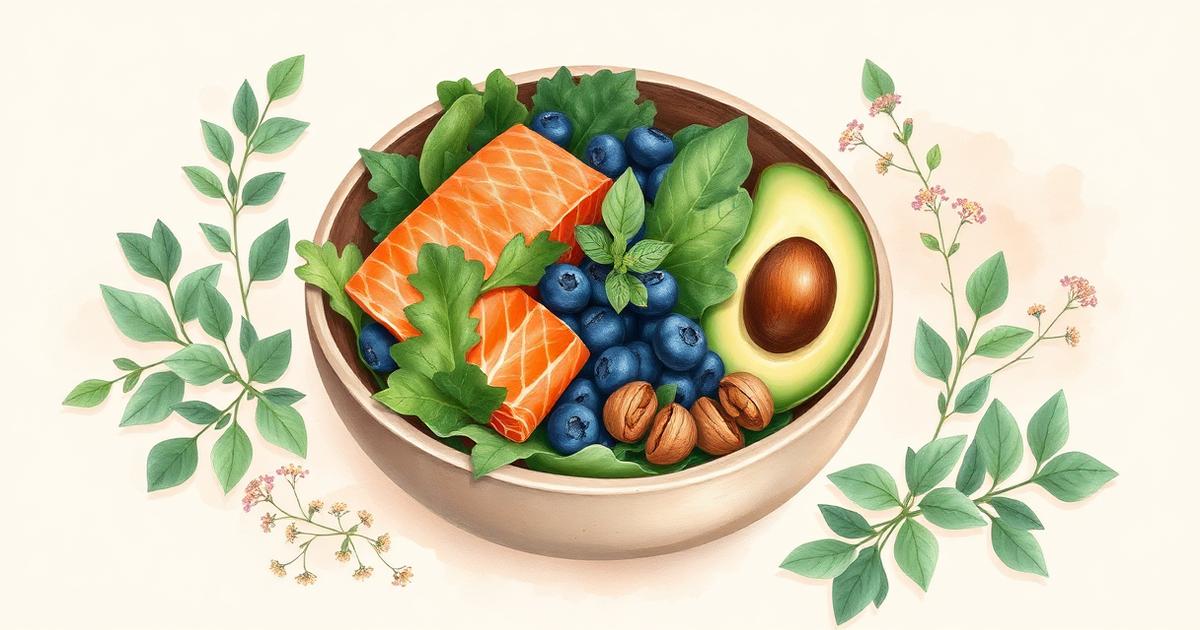
EPA and DHA are structural components of neuronal membranes and have anti-inflammatory effects. Fatty fish — salmon, sardines, mackerel, herring — twice a week is the simplest source; walnuts, chia, and flax provide the plant precursor. Omega-3s are among the better-studied adjuncts in depression, though they work alongside treatment, not instead of it.
Vitamin D
Low vitamin D is common in North Carolina winters, especially for people who work indoors and for people with darker skin, who synthesize less vitamin D per minute of sun exposure. Deficiency is associated with low mood and fatigue and is easy to test and correct.
B12, folate, and iron
These three deserve special mention because deficiency can imitate depression almost perfectly: fatigue, low motivation, brain fog, irritability. Iron deficiency is common in menstruating women and in people who have had bariatric surgery; B12 deficiency is more common with vegetarian and vegan eating, long-term metformin or acid-reducing medication, and with age. This is one of the reasons we consider labs rather than assuming every low mood is primarily psychiatric.
Magnesium and zinc
Both participate in neurotransmitter regulation and the stress response, and both are commonly under-consumed on a highly processed diet. Leafy greens, beans, nuts, seeds, and whole grains cover most of the gap.
A word on supplements: correcting a documented deficiency helps; guessing usually does not. Some supplements also interact with psychiatric medication — St. John's wort is a notable offender. Bring your bottles to your appointment. We review them as part of medication management.
Caffeine, alcohol, and the sleep you are not getting
Caffeine has a half-life of roughly five to six hours, which means a 3 p.m. coffee is still meaningfully present at 9 p.m. It raises adrenaline, amplifies anxiety and panic in sensitive people, and thins deep sleep even when you fall asleep fine. Keeping caffeine before noon, and tapering rather than quitting abruptly, is one of the most reliable anxiety interventions we recommend.
Alcohol is the mirror image: it shortens the time to fall asleep, then suppresses REM sleep and wakes you at three in the morning with rebound anxiety. It interacts with many psychiatric medications and depletes B vitamins. For anyone treating depression, anxiety, or PTSD, cutting back is frequently the highest-yield change available — and if cutting back proves hard, that itself is worth discussing without judgment.
Poor sleep then feeds back into eating: short sleep raises ghrelin, lowers leptin, and pushes cravings toward fast carbohydrates the next day. Food, sleep, and mood move as one system, which is why we treat them that way in our guide to hormones, mental health, and weight.
Medication, appetite, and weight
Psychiatric medication and eating interact in both directions, and pretending otherwise helps no one. Some antidepressants, mood stabilizers, and antipsychotics increase appetite or slow metabolism. Stimulants used for ADHD often suppress appetite through the middle of the day, leading to an evening rebound and inadequate protein overall — something we watch for closely after Qb ADHD testing leads to treatment.
These effects are manageable. Options include adjusting the medication or dose, shifting when it is taken, front-loading protein at breakfast before a stimulant takes effect, planning a substantial evening meal, and monitoring weight and labs over time. What we ask is that you raise it early, rather than quietly stopping a medication that is helping.
Eating patterns for particular seasons of life
Veterans
Service leaves food habits behind: eating fast, eating late, eating whatever is available on shift. Hypervigilance and disrupted sleep make caffeine and alcohol especially tempting. Small structural changes — a real breakfast, a caffeine cutoff, protein before evening — often reduce the physical layer of hyperarousal we address in veterans mental health care.
Children and teens
Kids show blood-sugar swings as behavior: the after-school meltdown, the impossible morning. Protein at breakfast, a real snack after school, and regular family meals are more effective than any lecture about sugar. Skipping meals in adolescence also deserves attention — restriction can be an early sign of an eating disorder, which we screen for during child and adolescent visits.
Busy professionals
Back-to-back meetings, coffee as lunch, and a large late dinner is a recipe for exactly the afternoon crash and evening insomnia that gets described to us as burnout. Batch-prepared protein, kept-at-desk snacks with fiber and fat, and a real lunch break do more for concentration than another cup of coffee.
A starting plan you can actually keep
Low energy and low motivation are symptoms of the very conditions you are trying to improve, so the plan has to be small enough to survive them. Pick one change and hold it for a week before adding another.
Week 1: protein at breakfast, every day.
Week 2: eat something every four to five hours; stop skipping lunch.
Week 3: add a vegetable or bean serving to two meals a day.
Week 4: move caffeine before noon.
Week 5: fatty fish twice a week, or an omega-3 source daily.
Week 6: reassess alcohol, and notice what your sleep did.
Convenience food counts. Frozen vegetables, canned beans and sardines, rotisserie chicken, bagged salad, plain yogurt, and eggs are legitimate groceries. Perfection is not the goal; a repeatable pattern is.
When to get evaluated
Nutrition supports mental health. It does not replace care. If low mood has lasted most days for two weeks or more, if worry is constant and hard to control, if sleep stays broken, if trauma symptoms intrude, if concentration has collapsed, if you are restricting food or bingeing, or if you are using alcohol or substances to cope, an evaluation is the right next step.
At Greene Mental Wellness we treat nutrition, sleep, movement, and psychiatry as one conversation. We provide anxiety and depression care, medication management, objective ADHD testing, veterans mental health, and child and adolescent care. See our full list of services, read our complete guide to care here, or request an appointment.
We see patients in person in Wake Forest, NC and by secure telehealth across North Carolina — including Raleigh, Rolesville, Youngsville, Franklinton, and Louisburg. Call 919-321-1194 to get started.